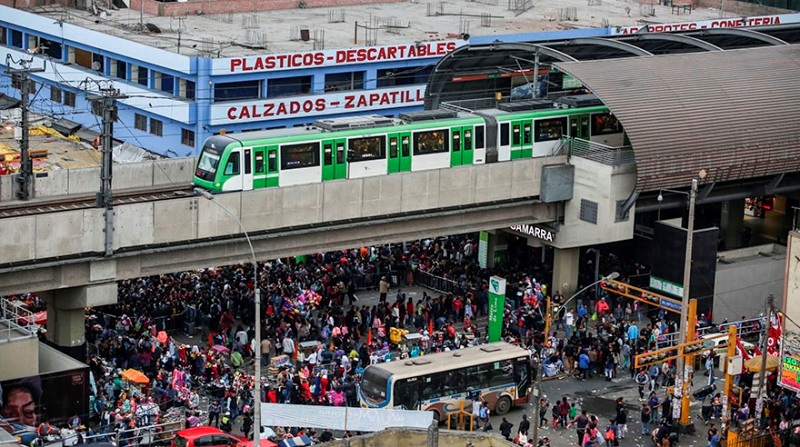
I’ve been living in Lima, Peru for the past three months and it’s for sure been a change from NYC. Being half Peruvian, having visited Lima 11 other times in my life, and having written my Senior Thesis at NYU on the city’s urban development patterns, I’m pretty used to this place. Thank goodness for that because this time around I don’t have the luxury of getting around in a family member’s car and for sure don’t have enough money to taxi everywhere everyday. I’m limited to Lima’s public transit, and the options are pretty few and far between.
Thankfully though I live and move around the only areas where it exists.
Here’s a street map of Lima
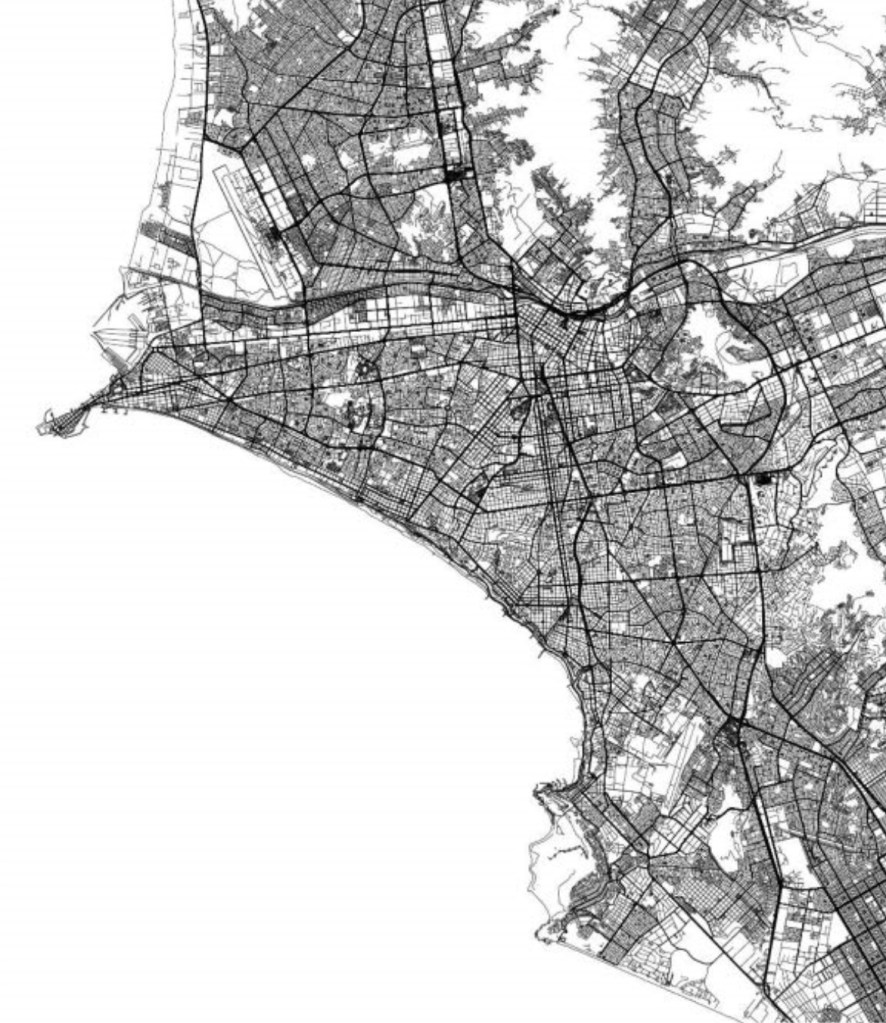
(This is zoomed into the part of the city where I live. For context as to how small the above view is, here’s a google maps view of the entire metro area with a square over the area indicating the above map)
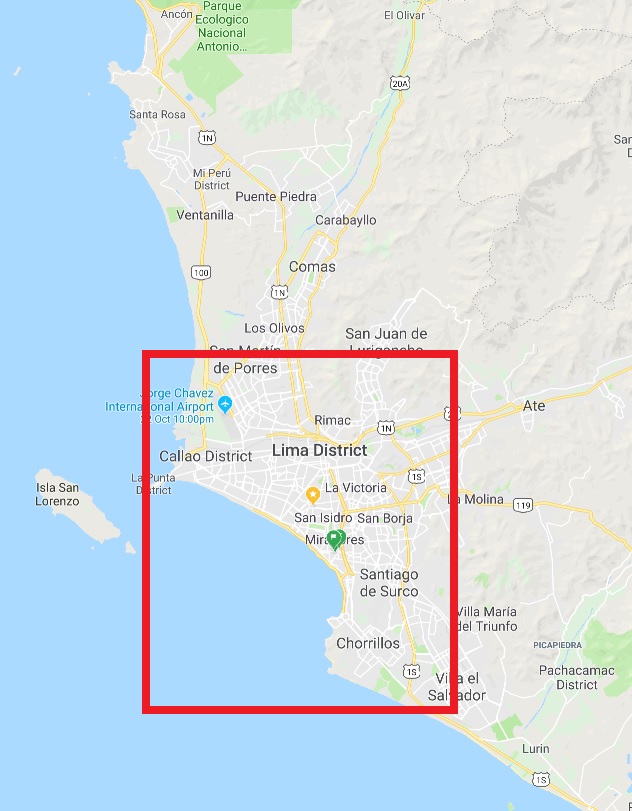
And here’s where we have public transit.

To understand this image above, made by Yours Truly, I made two more maps. The first one in the gallery includes just the elevated train and Bus Rapid Transit (BRT) lines Lima has, known respectively by locals as El Tren Eléctrico and the Metropolitano. The second map has the public bus lines known as the Corredores.


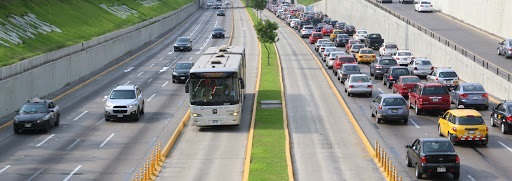

The Metropolitano during rush hour inside the station (far left) and on Javier Prado (middle).
The Metropolitano passing Lima’s financial District (far right).
If you noticed, Lima, a city of 10 million people has only one train and BRT line and 5 bus lines. No comment.
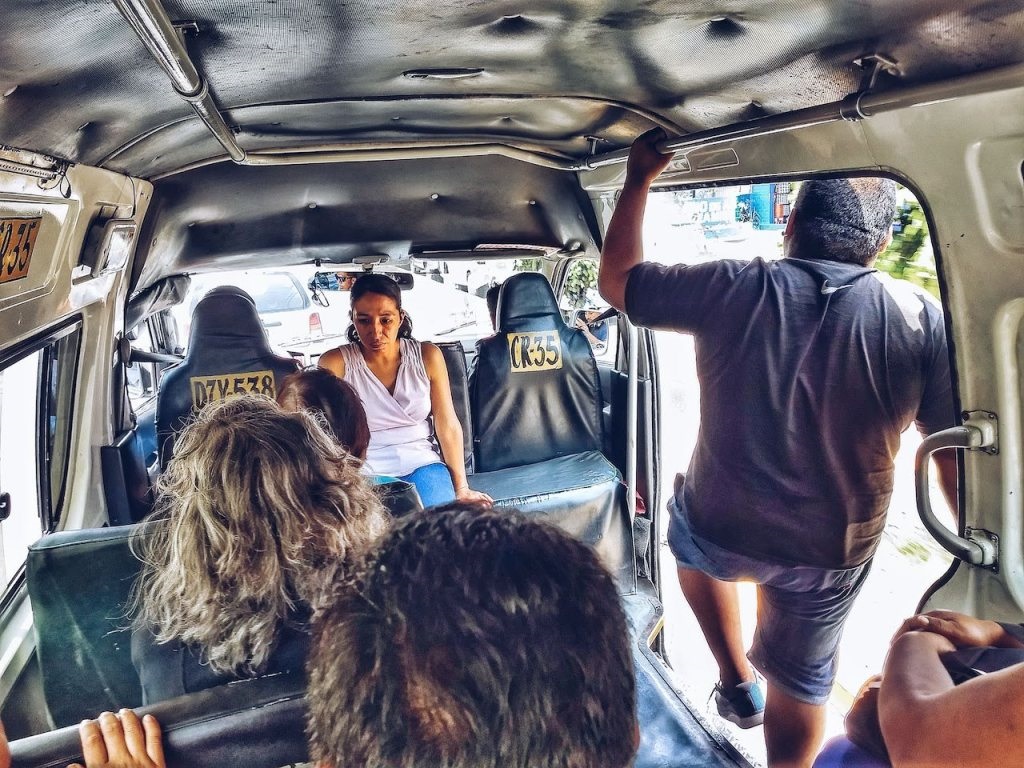
I emboldened public previously since Lima’s streets are erupting, to put it lightly, with combis and micros (see photo below). These are privately owned bus lines functioning as public transit, or in urban planning terms, paratransit. With these you can get just about anywhere in the city and without your own car. They’re so absurdly cheap. Depending on the distance a ride can cost you from $0.15 to $1. You’d really only pay $1 if you’re traveling across the whole of Lima, and that would take you around 4+ hours.
The quality of the micros and combis change depending on where their lines run. The majority passing through areas urbanized more than 60 years ago, i.e. the middle class zones and up, are modern buses you’d see in the global north. They’re just a bit dingier. They’ve become more of a frequent sight the past 10 years. If you go to poorer areas, here the majority of paratransit experiences become adventures. Most of the combis here puke cancer-inducing fumes and soot into the air and make you feel like you need to go to the chiropractor post-commute since they have no suspension.


(right) One of the more modern combis starting to dot Lima’s streets. Mind you, these are still not public buses.
(Sources: See citations 5-6)
The public transit Lima does have though, I’m absolutely impressed by! Don’t think it’s some magnetic-levitation shiz or driverless buses. It’s pretty standard, functions efficiently, and is clean. But that’s it! That’s why I’m blown away! To give you cultural context as to why I’m so shocked, I speak from personal experience as most Peruvians and Peruvian descendants have pretty low expectations for what the government can do (since we’ve had 50 years of stellar government scandals and incompetence that have put infrastructure back in this country about 30 years). There’s no exaggeration here. Ask any Peruvian.

(left) The train really helps out with street congestion. From one end of the line to the other in train can take 40 minutes. In car, it can take between 2 – 3 hours.
The train. She’s so pretty (right)

This shot was taken over Ovalo Higuereta in Lima’s Surco district. The station under construction is Estación Cabitos.
Sources
1. Susie Arts. “Unframed Lima Peru Metropolitan City View Abstract Street Map.” Amazon.com. https://www.amazon.ae/Susie-Arts-Unframed-Metropolitan-Abstract/dp/B07PXQQXLL
2. El Comercio. “Imagen Referencial/Archivo.” elcomercio.pe. https://elcomercio.pe/lima/transporte/metropolitano-conoce-horario-especial-feriado-noticia-551809-noticia/
3. Metropolitano. “Servicios del Metropolitano por Semana Santa.” metropolitano.com.pe. http://www.metropolitano.com.pe/prensa/noticias/servicios-del-metropolitano-por-semana-santa/
4. Global BRT Data. “Global BRT Data.” brtdata.org.https://brtdata.org/location/latin_america/peru/lima
5. Unknown. “Combis que Circulan en Lima Tienen los Días Contados.” notasalpaso.blogspot.com. https://notasalpaso.blogspot.com/2015/02/combis-que-circulan-en-lima-tienen-los.html
6. Elliott Gresswell. “Riding Batman (How to Catch a Bus in Peru).” irreverentprogress.com. http://www.irreverentprogress.com/blog/2016/6/19/riding-batman-how-to-catch-a-bus-in-peru
7. Jorge Gobbi. “Lima, Guía 2019 de Transporte Público.” Blog de Viajes. https://www.blogdeviajes.com.ar/2019/02/05/lima-guia-transporte-2019/
8. Post, Colin; Alonso Chero, El Comercio. “Peru Investigates Overspending in Lima Metro Expansion.” peruports.com. https://perureports.com/peru-investigates-overspending-lima-metro-expansion/4407/
9. Andina. “Línea 1 de Metro de Lima”.” rpp.pe. https://rpp.pe/lima/actualidad/metro-de-lima-linea-1-reporta-retrasos-servicio-por-fallos-sistema-noticia-1220571
10. Ulma Construción. “Tren Eléctrico, Lima, Perú.” ulmaconstruction.cl. https://www.ulmaconstruction.cl/es-cl/proyectos/puentes-viaductos/tren-electrico-lima
 Urbano
So excited to read more of your work! Hope all is going well
LikeLike
Glad you’re excited, man! I’m doing pretty well.
LikeLike
Hi Juanma. I am a friend of Eric Darton and an artist, I am also his student in Chinese Bagua Tai Chi. I live part of the year in Lima. My wife is Peruvian and she is from Barranco. The Transportation system us very crazy. There are only so many routes to get anywhere. Most routes are funneled so that all traffic gets caught and stuck like a drainage trap. I have heard that the streets follow the old colonial routes. The public transportation is not enough. I have also heard that the municipalities are seen as independent and not part of a unified system. One time we were stuck in a downtown square going to the north for 4 houses – from 12-to 4 in the morning. That airport drive is unbelievable
LikeLike
Thanks for writing, Frank! Super exciting to hear about an expat living in my querida Lima. Some of the main corridors like Camino Real, Carretera Central, Antigua Panamericana, and Paseo la Republica do follow the old colonial routes. Also, yes the municipalities are seen as independent and not part of a unified system. It’s starting to change a bit with the installation of the Corredores, Metropolitano, and train since traffic is such a social strain on Limenhos, but it’s for sure not happening fast enough. Enjoy the following posts!
LikeLike